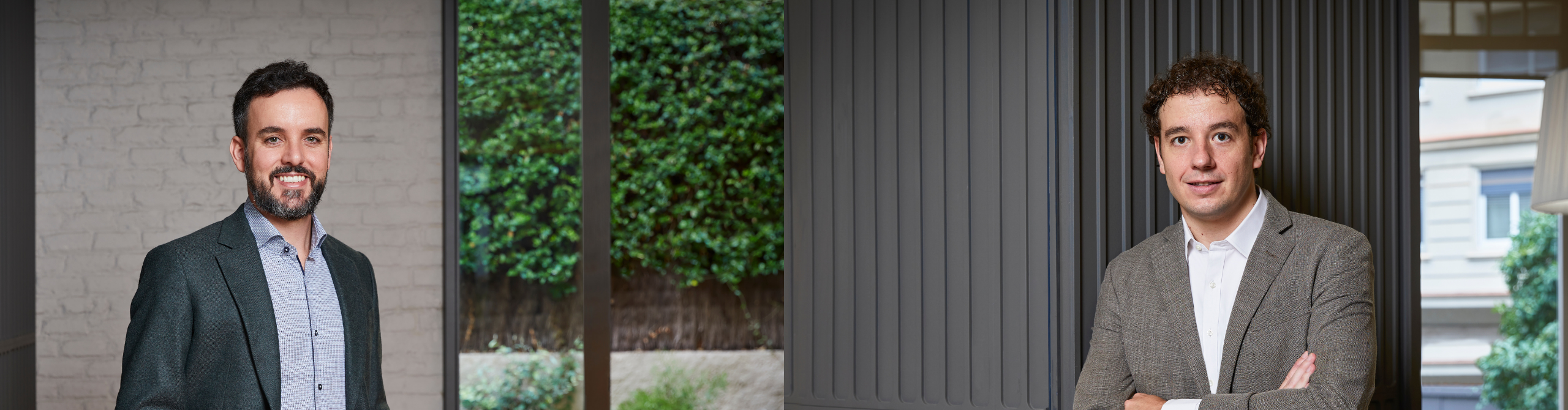
Authors: Gustavo Barroeta and Guillem Augé, Partners at Miura Partners
Spanish SMEs are currently facing an unprecedented convergence of pressures. The rise of artificial intelligence is reshaping entire business models within months, not years. Sustainability is no longer a reputational option but a regulatory and commercial requirement. And geopolitical tensions -with their direct impact on energy prices, raw material availability, and the reliability of supply chains- add a layer of uncertainty that few companies are prepared to manage.
All of this is unfolding within a particularly exposed business landscape: Spain and Italy lead Europe in the prevalence of mid-sized family-owned companies. This model has undeniable strengths -commitment, rootedness, and long-term vision- but, precisely because of its nature, it tends toward caution when the situation calls for boldness. These are companies with strong know-how and significant potential, many of them leaders in relevant niches, generating stable employment and exporting internationally. For them, facing these forces alone is becoming increasingly unsustainable.
In this context, private equity firms have more than just an opportunity. They have a responsibility. Not in the rhetorical sense of the word, but in its most concrete meaning: the ability to act and the obligation to do so well. Institutional investors -pension funds, insurers, foundations- who entrust their capital to these firms increasingly expect that their money contributes to more than just financial returns. At the same time, the companies receiving this capital are also increasingly expecting a partner who understands the world in which they operate and helps them navigate it. This dual expectation defines the new standard for private equity.
Responsible or impact investing should not be reduced to a specialized category or a thematic niche reserved for specific sectors. It should be the natural way of understanding private equity management at a time like this. Because the most transformative impact is not always found in financing the latest climate technology, but in equipping hundreds of industrial, service, or consumer SMEs with the capabilities they need to lead change.
And this is only possible when the private equity firm and the entrepreneur work as true partners. Private equity does not replace the founder; it complements them. The entrepreneur brings deep sector knowledge, a direct relationship with clients, and a company culture shaped over years -often decades- of dedication. The private equity firm, in turn, mobilizes capital, talent, experience, and knowledge accumulated across dozens of transformation processes to tackle what an SME can hardly solve on its own: professionalizing management, accelerating digitalization, attracting top executive talent, executing inorganic growth strategies, implementing best operational practices, or opening international markets. It is not about imposing an external model, but about building a roadmap together with the entrepreneur that preserves the company’s identity while multiplying its competitive capacity.
However, it is important to be precise about what this entails. We are talking about real, measurable impact -not communication strategies or formal compliance with indicators. The distinction between managing well internally -what is known as ESG practices- and actively contributing to transforming the environment in which a company operates is not semantic; it is substantial. And private equity has a responsibility to be honest about that distinction. A project that is not economically viable will not scale and has limited transformative capacity -financial discipline remains the prerequisite for any real and lasting impact-. But a project that only pursues financial return overlooks something valuable: the potential of private equity to align profitability with purpose, and to do so at scale.
Ultimately, this is the promise of private equity when exercised with coherence: not simply to accelerate business growth, but to guide it. To guide it toward more sustainable models, toward sectors that address real needs, and toward solutions that endure beyond the investment cycle. The question is no longer whether capital can do good. The question is whether those of us who manage it are living up to that role.
Article published in the monthly magazine Capital Privado (Issue No. 78) by elEconomista and by elEconomista.es